Dec 8, 2023
CIIP
Education
CIIP Chronicles: Navigating the Maze of Image Management
In the ever-evolving landscape of imaging informatics, the CIIP exam stands as a beacon of professional competence, challenging candidates with a broad spectrum of questions, of which Image Management is a crucial piece. This installment of the CIIP Chronicles dives deep into the Image Management domain, unraveling its complexities and casting light on its 23 questions - a significant segment in the 130-question labyrinth of the CIIP exam. We are here to guide you through this maze, offering clear, concise insights and practical wisdom to not only help you prepare for the CIIP exam but also to enhance your understanding of the critical elements of Image Management in imaging informatics.
1) Environmental Design for Optimal Image Viewing and Interpretation in Imaging Informatics
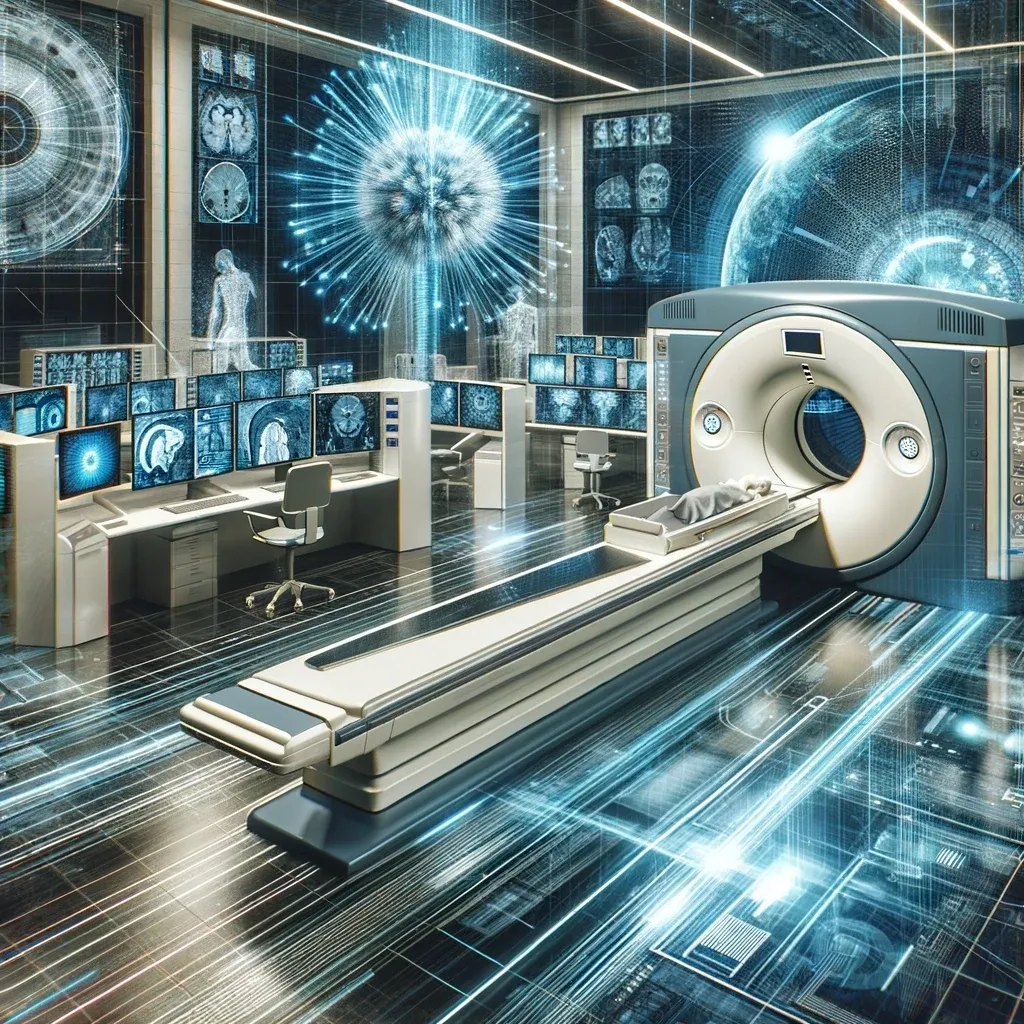
In the realm of imaging informatics, the significance of environmental design cannot be overstated. It's where the physical setting converges with technological sophistication to forge an ideal environment for image analysis. This involves crafting a space that not only accommodates advanced technological needs but also addresses the ergonomic and psychological comfort of the users. Here, we explore how factors like lighting, acoustics, and spatial organization contribute to creating an optimal environment for the complex task of image interpretation. This segment delves into how the ambiance of a reading room can significantly influence the accuracy and efficiency of radiological assessments, thereby impacting patient outcomes.
A. Ergonomics: Enhancing Comfort and Efficiency Ergonomics plays a pivotal role in reading room design. It involves optimizing the workspace to reduce physical strain and enhance efficiency for radiologists and technicians. Ergonomic considerations include:
· Adjustable Workstations: Customizable workstations that can be adjusted for different users to maintain comfortable and healthy postures during long hours of image analysis.
· Input Devices: Utilizing ergonomic input devices like trackballs or alternative mouse designs to prevent repetitive strain injuries commonly seen in radiologists.
B. Environmental Factors: Crafting the Ideal Conditions The environmental setup of a reading room significantly impacts the quality of image interpretation.
· Lighting: Controlled lighting conditions are essential to minimize glare and eye strain. Adjustable ambient lighting that matches the brightness of display monitors helps maintain focus and reduces fatigue.
· Acoustics: A quiet environment is crucial for concentration. Soundproofing and strategic room layouts can help minimize distracting noises, enhancing the accuracy of diagnostics.
C. Room Layout and Physical Considerations An effective room layout is vital for both individual focus and collaborative discussions.
· Space Design: The reading room should allow for both private workspaces and areas conducive to collaboration, striking a balance between concentration and communication.
· Location and Accessibility: Placement of the reading room in proximity to image acquisition devices and collaborative spaces can streamline workflow and facilitate quicker consultations.
2) Optimizing the Human-Computer Interface in Imaging Informatics
The interface between human and machine in imaging informatics is a critical juncture where efficiency, accuracy, and user experience intersect. This section illuminates the importance of intuitive and ergonomic design in the tools and systems used by radiologists and other users. We'll explore how the seamless integration of Electronic Medical Records (EMR), Radiology Information Systems (RIS), and Picture Archiving and Communication Systems (PACS) can streamline workflows and reduce cognitive load. Additionally, we'll discuss the role of ergonomic input devices and innovative technologies like voice recognition in enhancing user interaction, thus facilitating a smoother, more efficient diagnostic process.
A. Seamless Integration: EMR/RIS/PACS/Reporting
In the complex ecosystem of imaging informatics, the integration of Electronic Medical Records (EMR), Radiology Information Systems (RIS), Picture Archiving and Communication Systems (PACS), and reporting tools is crucial. This integration streamlines workflows and enhances diagnostic accuracy.
· EMR/RIS/PACS Synchronization: The synchronization between EMR, RIS, and PACS ensures that patient data and imaging studies are accessible within a unified system. For example, when a radiologist accesses a patient's record in the EMR, relevant imaging studies from PACS and historical data from RIS are readily available, providing a comprehensive patient overview.
· Reporting Integration: Integrating reporting tools with these systems facilitates efficient report generation and distribution. Radiologists can seamlessly retrieve images from PACS, review patient histories in EMR, and document findings in a structured report that is automatically archived and shared with referring physicians.
B. Input Devices: Enhancing Interaction
The choice of input devices in imaging informatics can significantly impact the efficiency and comfort of radiologists.
· Ergonomic Devices: Devices like ergonomic mice, trackballs, and keyboard setups are tailored to reduce strain during extended periods of use. For instance, a trackball mouse allows radiologists to navigate images with minimal hand movement, reducing the risk of repetitive strain injuries.
· Voice Recognition Tools: Speech recognition technology enables radiologists to dictate reports, reducing the need for manual typing and accelerating the reporting process.
C. Display Devices: The Window to Diagnosis
The quality of display devices in imaging informatics is vital for accurate image interpretation.
· High-Resolution Monitors: Advanced high-resolution monitors provide clarity and detail necessary for diagnosing from complex imaging studies. These monitors are designed to display a wide range of grayscale tones, enhancing the visibility of subtle abnormalities.
· Calibration and Maintenance: Regular calibration and maintenance of these monitors ensure consistent image quality over time. For instance, routine calibration checks can be scheduled to ensure that the display settings remain optimal for diagnostic accuracy.
D. Application in Clinical Settings
Consider a hospital's radiology department where EMR, RIS, and PACS are seamlessly integrated. Radiologists use ergonomic input devices for navigating and annotating images. Reports are dictated using advanced speech recognition software and directly integrated into the patient’s EMR for immediate access by referring physicians. High-resolution calibrated monitors ensure that the images are accurately displayed, aiding in precise diagnoses.
3) Optimizing Workflow in Imaging Informatics
Workflow optimization in imaging informatics is akin to choreographing a ballet – every move must be precise, and every step seamlessly integrated. This section ventures into the intricacies of workflow processes, highlighting how efficiency can be achieved through strategic planning and the adoption of new technologies. We examine the steps from patient registration to final report generation, emphasizing the importance of each phase in ensuring accurate and timely imaging services. This exploration includes the impact of AI in post-processing, the nuances of data compression, and the significance of structured workflows in maintaining the integrity of imaging studies.
A. Postprocessing Workflow: Post-processing in imaging informatics includes methods like segmentation and registration. Segmentation separates regions of interest from the background for focused analysis, while registration aligns images from different modalities for comprehensive evaluation. AI integration has revolutionized post-processing, enabling automated detection and quantification of abnormalities, enhancing efficiency and accuracy.
B. Data Compression: Understanding the difference between lossy and lossless compression is crucial. Lossy compression reduces file size by eliminating some data, which can sometimes affect image quality. Lossless compression maintains all original data, preserving the image integrity, essential for diagnostic purposes. Improper compression can result in significant quality loss, adversely affecting diagnosis. In the context of data compression for imaging informatics, the concept of transfer syntax is pivotal. Transfer syntax defines how DICOM data is encoded and communicated. This includes specifications for both the data compression (lossy or lossless) and the data format. Regarding Value Representation (VR), two common types are Implicit VR Little Endian and Explicit VR Big Endian. Implicit VR Little Endian is a widely-used format where the VR is not explicitly stated in the file, and data is encoded in a little-endian byte order (least significant byte first). On the other hand, Explicit VR Big Endian specifies the VR for each data element and encodes data in a big-endian format (most significant byte first). Understanding these concepts is crucial for professionals handling and transferring medical imaging data effectively.
C. Image Workflow: A standard workflow in imaging informatics begins with patient registration, creating an Admission, Discharge, Transfer (ADT) record, that contains patient related information. The patient is scheduled imaging, and a Order Message (ORM) is generated that provides details about the scheduled exam. The modality performs a C-FIND against the order filler to obtain DICOM Modality Worklist (DMWL). After the DMWL process, the patient undergoes the scanning procedure. Post-scan, the images are made available in the Picture Archiving and Communication System (PACS) for review. The radiologist then reads the exams and creates a final report. This report generation process is typically done in the Radiology Information System (RIS). Once the Report is resulted (ORU), it is distributed to other downstream systems, ensuring that the referring physicians and relevant healthcare professionals have access to the radiological assessment. This comprehensive workflow underscores the importance of each step in ensuring efficient and accurate imaging services.
D. Key Image Selection and Annotation: Key image selection and annotation in medical imaging, such as a CT scan for tumor detection, involves identifying and marking the most diagnostically significant images. This process is crucial for efficiently conveying critical information to referring physicians. Key images are selected based on their ability to clearly demonstrate the area of interest, like the size and location of a tumor. Annotations and markups add valuable context to these images. They may include arrows, measurements, or textual notes directly on the image, enhancing the clarity of the report. The DICOM standard includes Grayscale Softcopy Presentation State (GSPS), which allows these annotations to be stored and viewed consistently across different systems. GSPS ensures that the annotations are accurately overlaid on the images without altering the original pixel data, maintaining the integrity of the diagnostic information. This standardization is key in ensuring that key images and annotations provide clear, consistent, and valuable diagnostic information across different platforms and viewers. When key images in medical imaging are annotated, these markups are saved as a non-image DICOM object with the modality code 'PR' (Presentation State). This ensures that the annotations are stored separately from the original image data, preserving the integrity of the diagnostic image while still providing the necessary contextual information. The use of the 'PR' modality code in the DICOM standard allows for consistent viewing and interpretation of these annotated images across different platforms and systems, ensuring accuracy and clarity in the diagnostic process.
E. Creating Teaching Files: Creating teaching files in imaging informatics, from a standards perspective, involves curating a collection of diagnostic imaging cases for educational purposes. These files typically include annotated images, detailed case histories, and diagnostic outcomes. The aim is to provide a comprehensive learning resource that covers a wide range of clinical scenarios and pathologies. Adhering to standards in assembling these files ensures the files are not only informative but also consistent in format and presentation, making them a valuable tool for training and reference for medical students, residents, and practicing radiologists.
F. Research and Clinical Trials: De-identification and pseudonymization are critical in research and clinical trials, particularly with the increasing use of AI in medical research. De-identification involves removing all personal identifiers from medical images and associated data, ensuring patient privacy. Pseudonymization, on the other hand, replaces private identifiers with artificial identifiers or pseudonyms. This allows for some level of tracking or data linkage while still protecting patient identity. The rise of AI in medical research leverages these anonymized datasets extensively, as large volumes of data are needed to train and validate AI algorithms. These processes are essential for maintaining patient confidentiality while enabling the vast potential of AI-driven research in healthcare.
G. Technologist Exam QC Workflow: Quality control before uploading images to PACS is a vital step in the imaging workflow. This process involves verifying that all relevant images are accurately captured and represent the study comprehensively. The quality check ensures that the images are of the necessary diagnostic quality, and that factors such as contrast, brightness, and sharpness are appropriately adjusted. This step is crucial for maintaining the integrity of the imaging study and ensuring that radiologists have the best possible information for accurate diagnosis and treatment planning.
H. Reporting and Results Communication: The transition from narrative to structured reporting in radiology, significantly impacts data standardization and retrieval. Structured reporting formats provide several advantages, including:
· Improved Readability: They make it easier to compare current findings with previous reports.
· Enhanced Data Mining and Research: The structured format allows for easier extraction and analysis of data, crucial for research and quality improvement.
· Increased Completeness: Structured reports reduce the omission of pertinent information. Standardization: These reports use standard lexicons, like RadLex, to reduce variability in terminology.
· Integration with Decision Support Tools: Structured reports can be integrated with guideline-based decision trees, enhancing completeness, particularly for complex pathology descriptions.
· AI Training: Structured reports can serve as a reference standard for AI algorithms, enhancing their accuracy and applicability.
I. Workflow Optimization: Workflow optimization in imaging informatics focuses on streamlining processes to enhance efficiency and patient care. This involves identifying bottlenecks, eliminating redundant steps, and incorporating automation where possible. For example, automating the transfer of images from the modality to PACS can significantly reduce manual intervention, speeding up the workflow.
J. Remote Interpretations: Remote interpretations, facilitated by telehealth and teleradiology, have greatly expanded the accessibility of diagnostic imaging. They allow radiologists to provide interpretations remotely, which is especially beneficial in underserved areas or where there is limited access to radiology expertise. This approach not only extends the reach of radiological services but also ensures timely diagnosis and treatment, irrespective of geographical constraints
4) Navigating Image Exchange and Standards in Imaging Informatics
Image exchange and standards in imaging informatics are the bedrock of interoperability and data integrity. In this section, we navigate through the complex landscape of standards like DICOM, HL7, and FHIR, unraveling how they facilitate seamless communication across diverse healthcare systems. We'll delve into the challenges of secure data transmission, emphasizing the need for robust encryption and de-identification practices to protect sensitive patient information. This segment also sheds light on the evolving technologies and methodologies that are reshaping the future of image exchange, underscoring the ongoing need for adaptive and dynamic standards in this rapidly advancing field.
DICOM Standard: The Digital Imaging and Communications in Medicine (DICOM) standard is fundamental in medical imaging for storing, transmitting, and manipulating medical images. It ensures consistent image quality and data integrity across different systems.
HL7 and FHIR: Health Level 7 (HL7) standards, including the emerging Fast Healthcare Interoperability Resources (FHIR), are crucial for the exchange of clinical and administrative data. They facilitate seamless communication between EMR, RIS, PACS, and other healthcare applications.
IHE Profiles: Integrating the Healthcare Enterprise (IHE) profiles play a significant role in harmonizing HL7, DICOM, and other standards, ensuring coordinated and interoperable healthcare workflows.
Secure Data Transmission: Ensuring secure data transmission is essential. This includes using encryption, audit trails, and de-identification practices, particularly for sensitive patient information.
Data Interoperability and Integration: The challenge in a multivendor ecosystem is to integrate various systems (like EMRs, PACS, and imaging modalities) in a manner that supports efficient clinical workflows, patient safety, and data accessibility.
Challenges and Solutions in Integration: Integration complexities arise due to varying data standards, proprietary interfaces, and the need for backward compatibility. Solutions include adopting universal standards and using integration engines for customization and data flow management.
Patient-Centric Data Access: With the increasing focus on patient-centric care, interoperability plays a crucial role in providing consistent access to a patient’s data across institutions, aiding in effective diagnosis & treatment.
Emerging Technologies in Image Exchange: The evolution of technologies like cloud-based services and AI in imaging demands more dynamic and versatile data exchange methodologies, emphasizing the importance of robust and flexible standards.
Future Directions and Challenges: As imaging informatics evolves, new challenges emerge, such as maintaining data integrity, ensuring compliance with global data privacy regulations, and adapting to changing technological landscapes.
The CIIP Chronicles series aims to simplify the complexities of imaging informatics, focusing on Image Management. Our mission is to provide essential insights for excelling in the CIIP exam and advancing your professional journey. Each chapter contributes to a comprehensive understanding of the field, going beyond exam preparation to enhance your expertise. We delve into pivotal topics like environmental design, human-computer interface, and image exchange standards, equipping you with the knowledge to innovate and lead in imaging informatics. This series is your guide to becoming an informed, forward-thinking professional in this evolving domain. Stay engaged as we continue to decode the intricate world of medical imaging and data management.